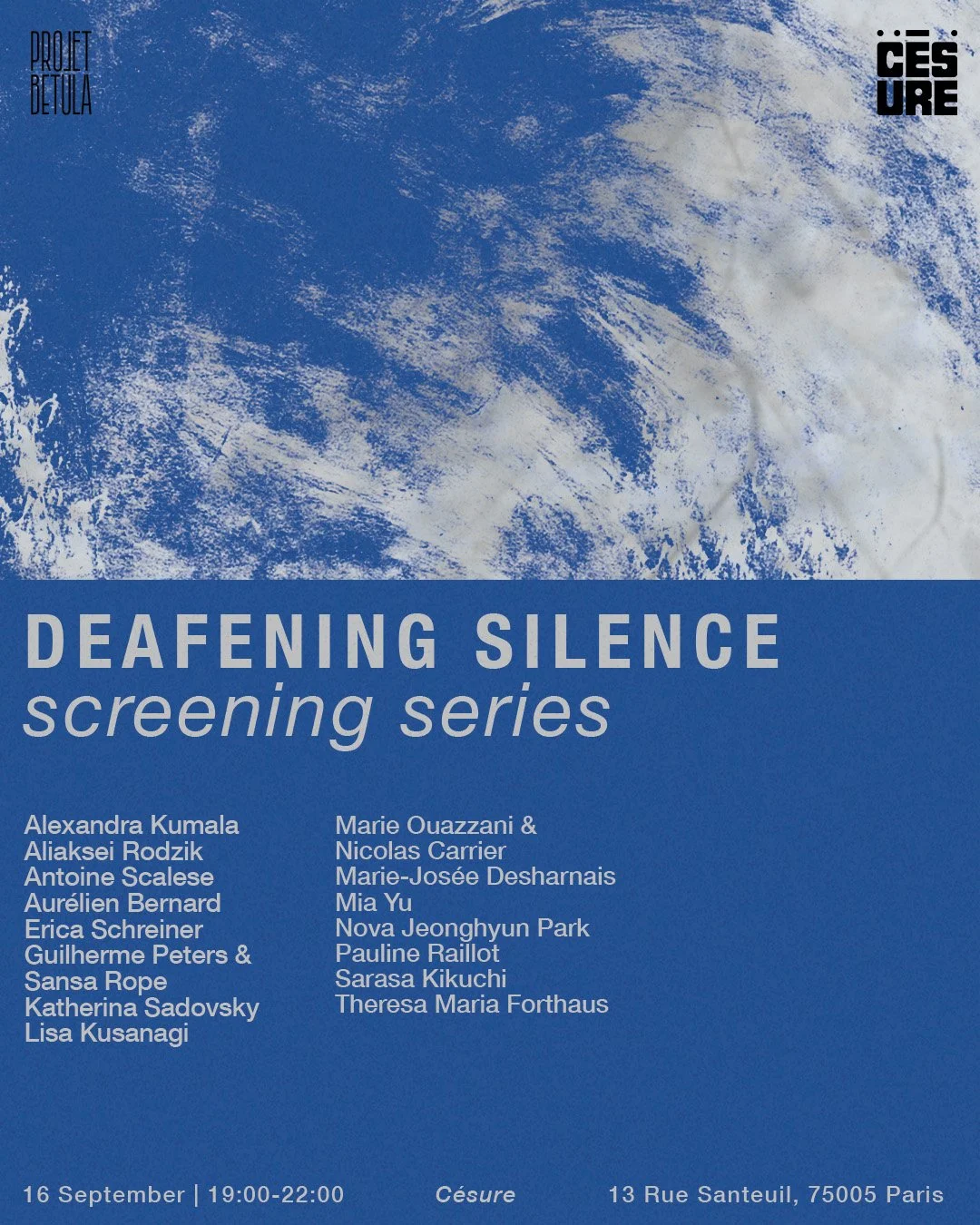
DEAFENING SILENCE is the second chapter of its screening cycle, following SPEAK VOLUMES (September 2025). While the first chapter considered the persistence of voices within haunted landscapes, family archives, and spectral bodies, this second chapter turns toward what remains unsaid or unspoken.
Silence is often read as an empty space where speech should be. This program starts from a different premise. Silence has a shape and a history, and it carries meaning of its own. It can be forced on people by violence and power, follow catastrophe, when words stop making sense or be chosen, as a way to protect what should not be exposed. In every case, silence is an active Actor, rather than a form of passive existence.
We brought together artists and filmmakers working with different moving-image forms whose practice engages silence as a condition shaped by power, catastrophe, refusal, or survival.
The screening unfolds in three interconnected parts: After the Explosion, Enforced Silence, Silence as Survival
Taken together, these three parts show that silence is never simply absence. DEAFENING SILENCE invites viewers to sit with what is left unsaid, and to listen to what silence brings up.
After the Explosion
An opening part of the screening is about the silence that follows a catastrophe: war, forced migration, environmental destruction, the collapse of infrastructure, or the breakdown of a familiar social world. It can be felt as shock, exhaustion, or the sense that language is no longer enough to describe what happened. Even in this silence, ruins of a destroyed place, physical or metaphorical, still tell a story.
-
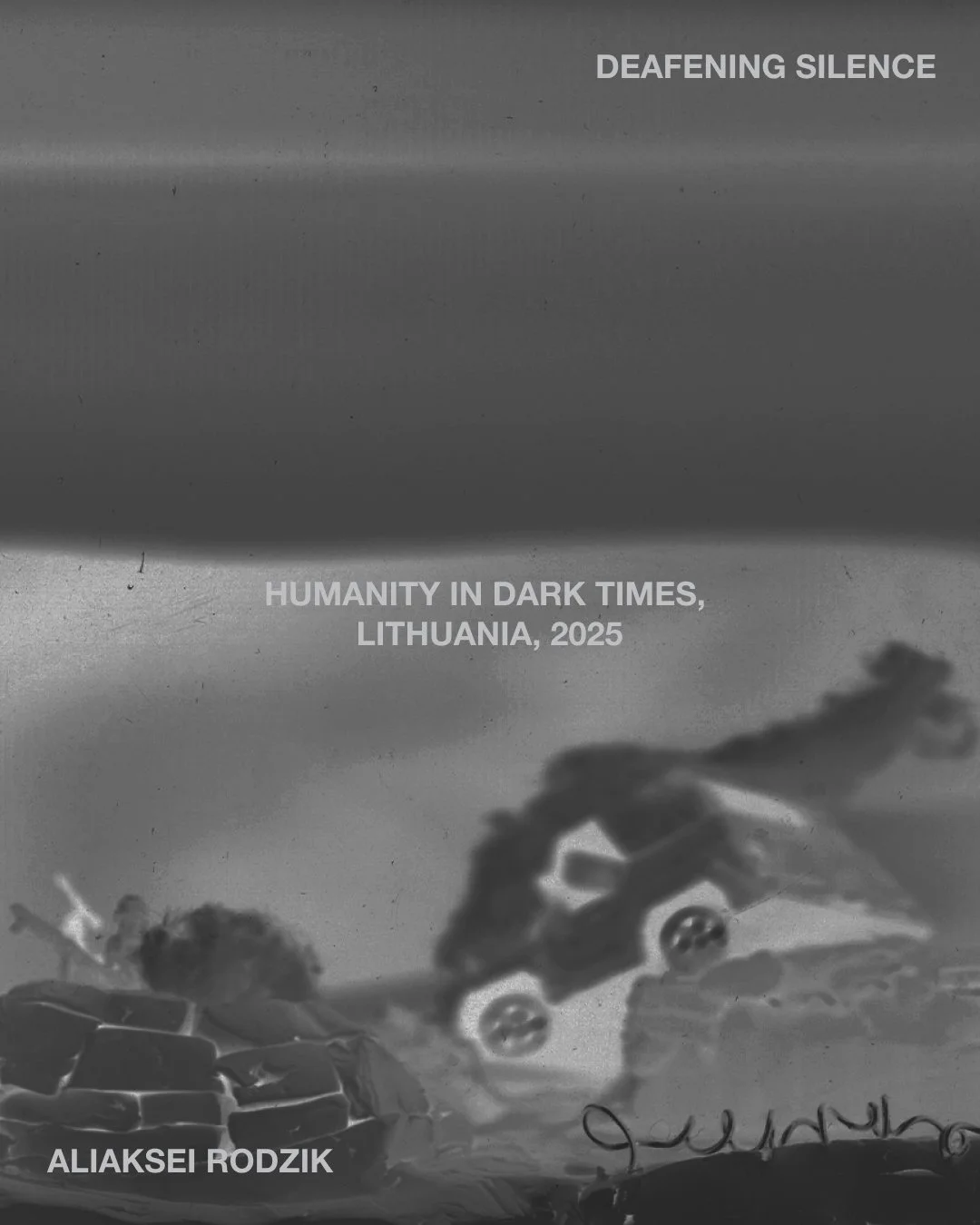
Humanity in Dark Times is an experimental anti-war film examining how war reshapes human nature. Using stop-motion and camera-less scanography, it transforms physical traces into fragile imprints of conflict and memory. The film confronts humanity’s destructive impulses and urges future generations to recognize the cost of violence in order to move beyond it.
-
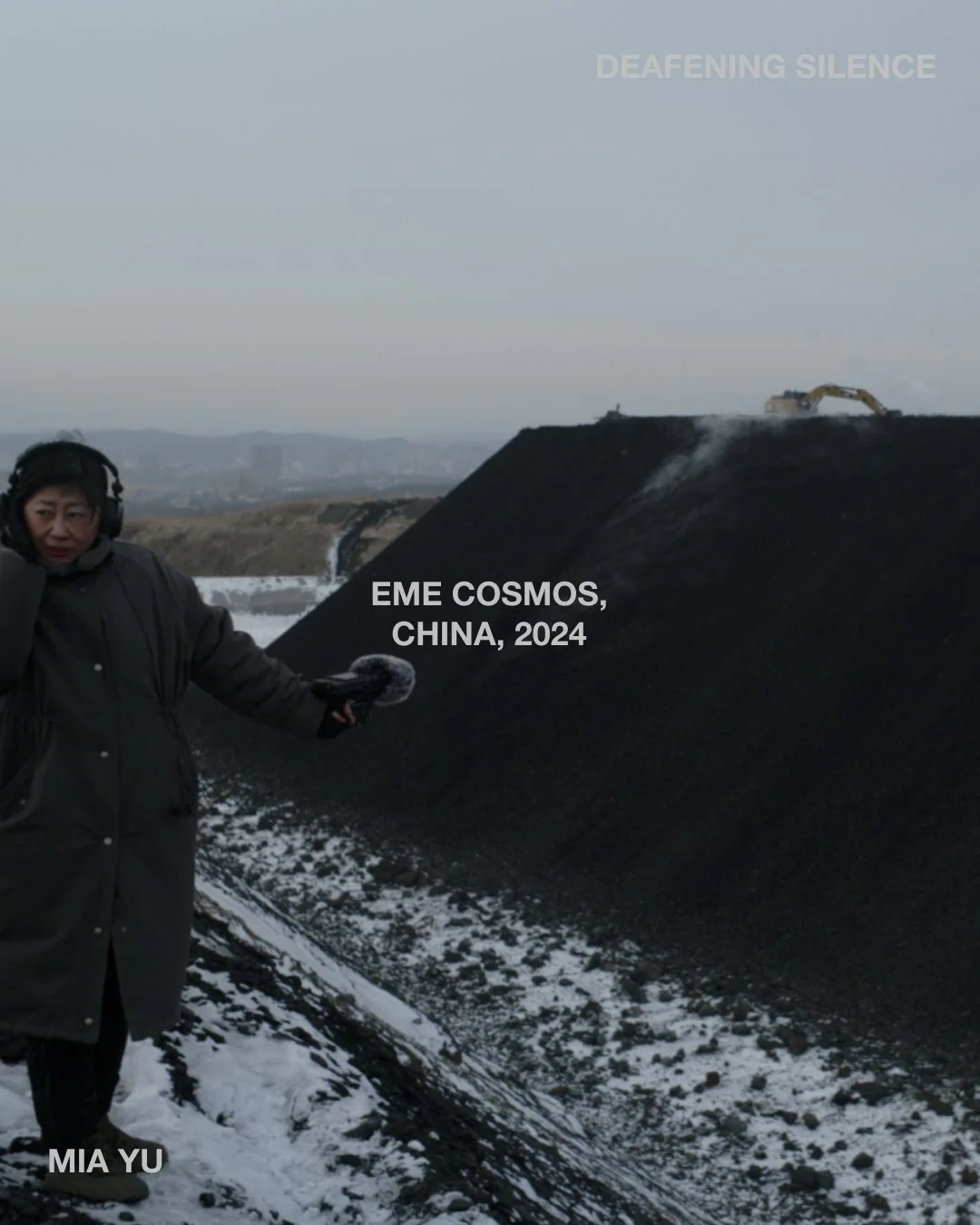
Rooted in three years of on-site research, Eme Cosmos was filmed in Fushun Asia’s largest open-pit mine and a major fossil fuel extraction site. The film narrates the traumatic story of the extractive landscape through the perspective of Eme, the Manchu Earth Goddess. Originating from the ancestral myths of the Changbai-Paektu Mountain range, Earth Goddess Eme is a divine being whose recumbent body nurtures all life, a cosmos where creatures and ecosystems dwell in symbiosis.
-
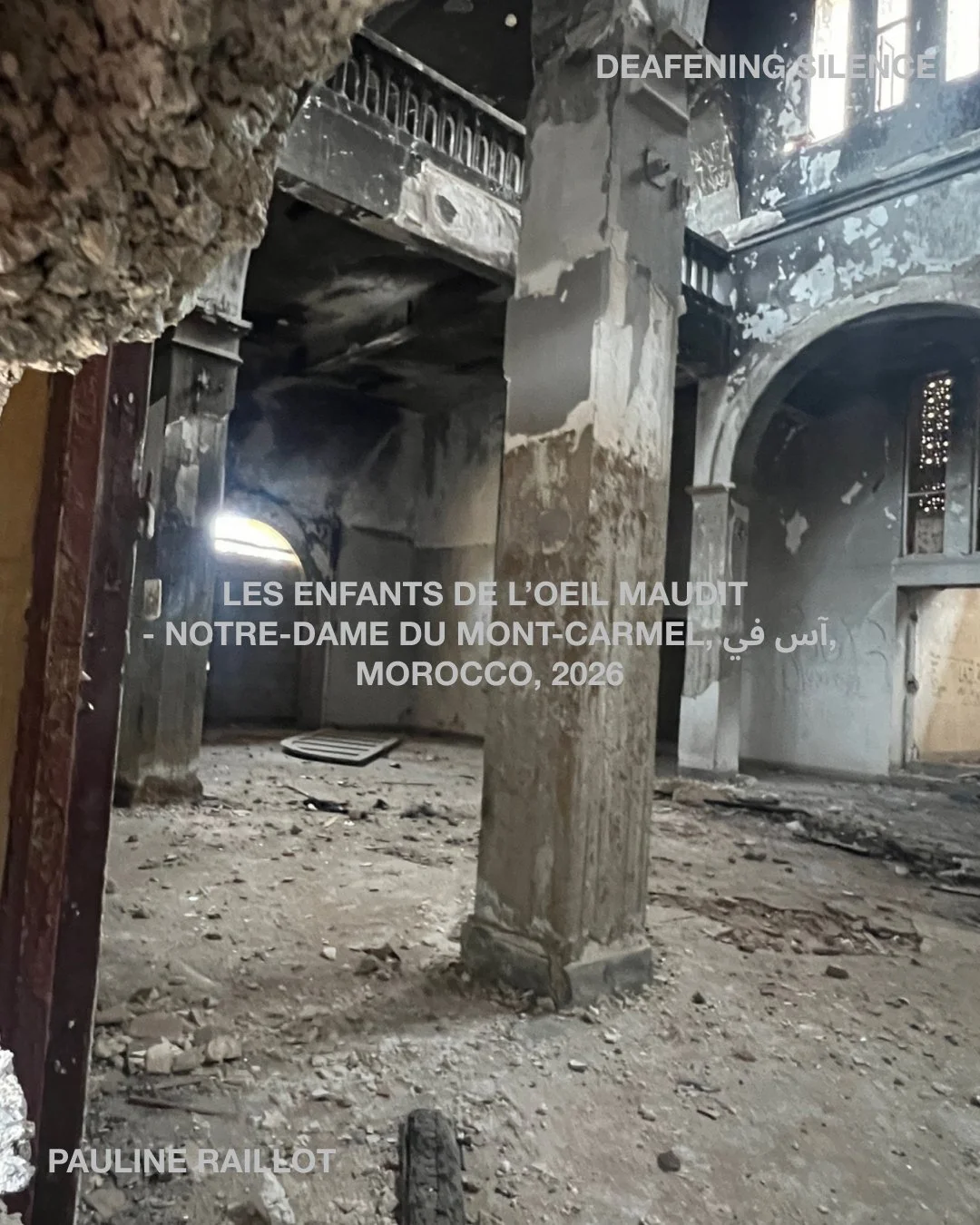
Les Enfants de l’Œil maudit (Children of the Cursed Eye) is a fragmentary film in which a wandering through a ruined church, traversed by children’s voices, gradually turns into an architectural tale.
-
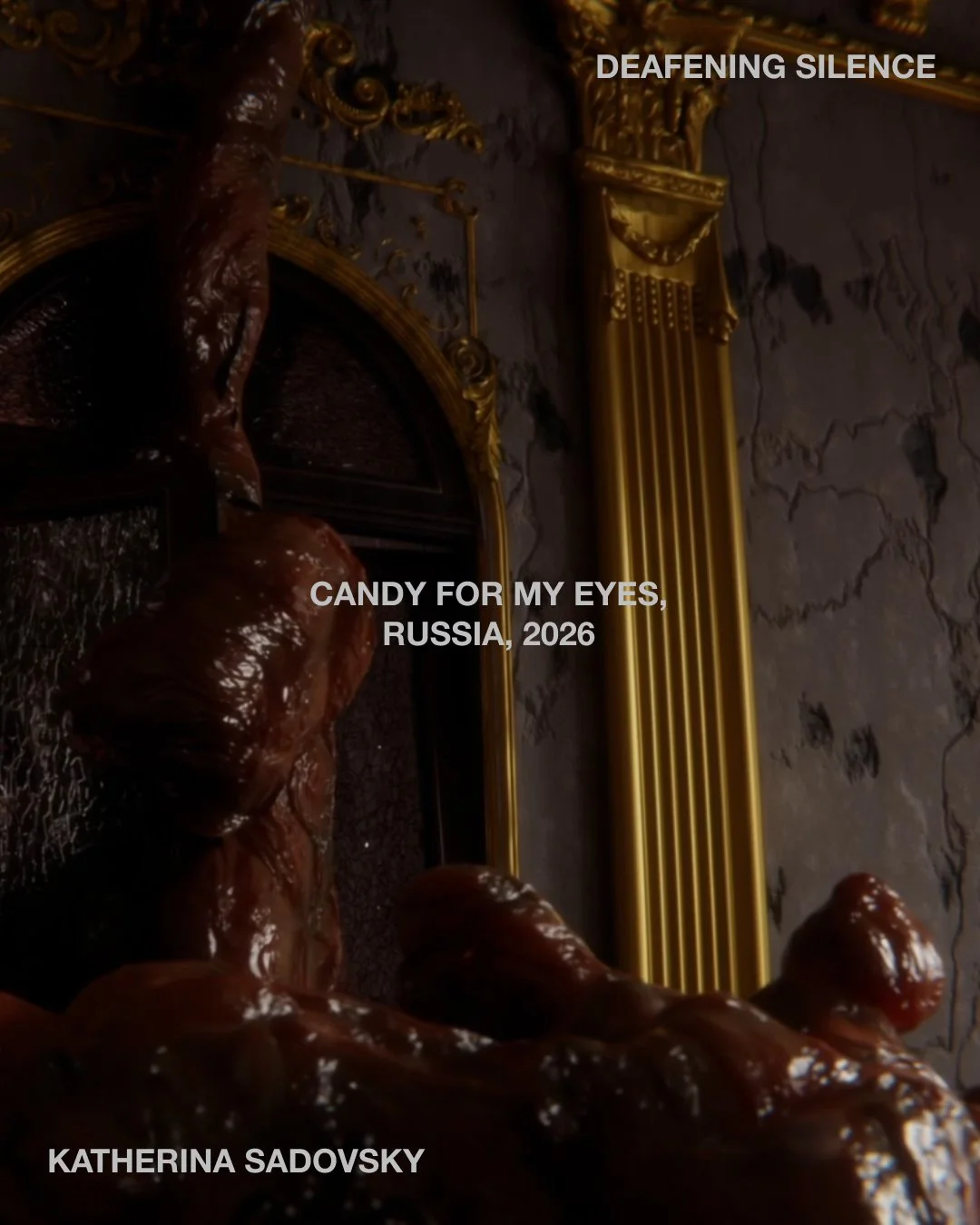
Candy for my eyes is a monstrous extension of the interiors of Soviet architectural structures. The viewer finds themselves inside the imperial buildings where the meetings of the Soviet revolutionary party were held. It is a fully constructed reality, similar to a computer game, with imperialist meeting halls adorned with golden columns and drenched in liquid and biomass resembling blood. The camera travels through these halls, occasionally pausing to zoom in on details. Something lives within these halls, pulsating and breathing. Only a few objects remain of the people, such as white tablecloths and scattered furniture.
-
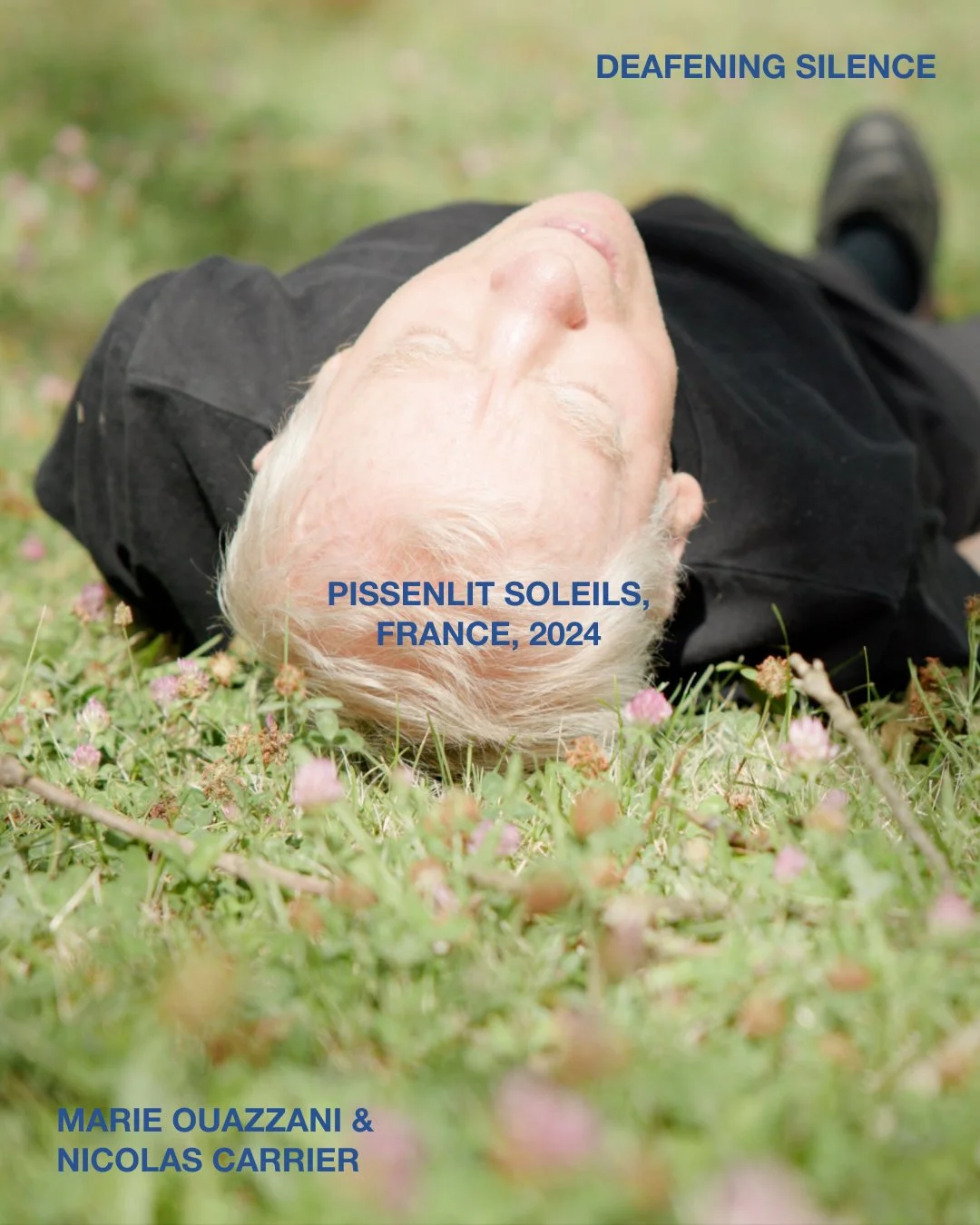
The video work ‘Pissenlit soleils’ (Dandelion blossoms): on a sunny day, an elderly man repeatedly tries to get up from the ground of what appears to be a park full of blooming dandelions in front of blurred architectural structures. His heavy breath, mixed with the occasional buzzing of bees and the gradually increasing sound of airplanes close by create a disquieting tension between awakening and resignation, thriving and exhaustion, pain and relief, cultivation and depletion.
Enforced Silence
Silence imposed through force, for example colonial or state violence, imprisonment, border controls, or bureaucratic erasure. It happens when people are denied the chance to speak, to talk about what they have lived through, and to be recognised. This silence is structural and it is built into systems that decide whose voice counts and whose does not.
-
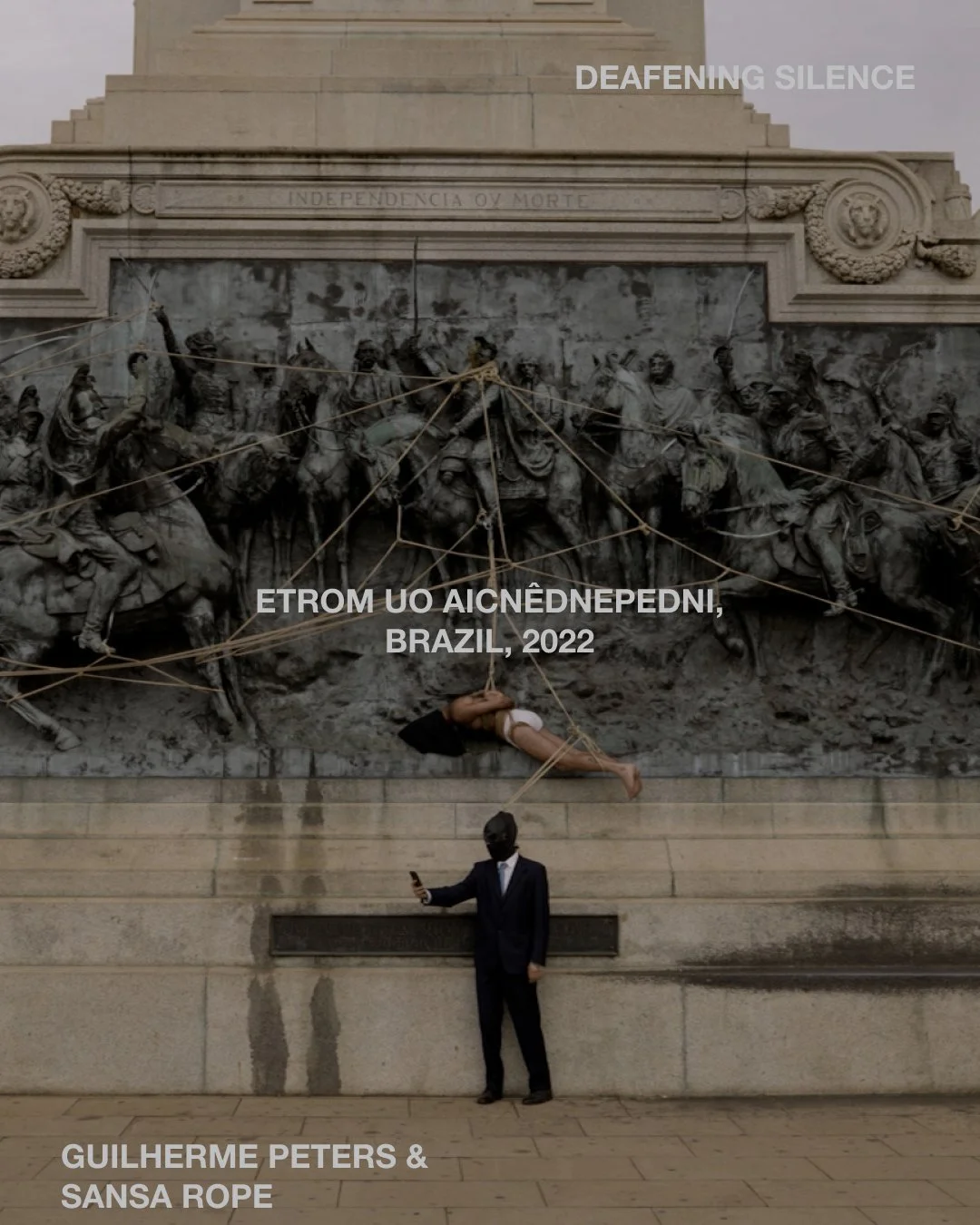
ETROM UO AICNÊDNEPEDNI was made from an intervention in the Monument to the Independence of Brazil (Altar da Pátria), from 1926. The action took place within an hour on May 30, 2022. The monument is located in Parque da Independência, in São Paulo, where Dom Pedro I reportedly proclaimed the emancipation of Brazil from Portugal in 1822. The monument was created by Italian duo Ettore Ximenes and Manfredo Manfreti during the first centenary of independence. In 2022 the second centenary is celebrated.
-
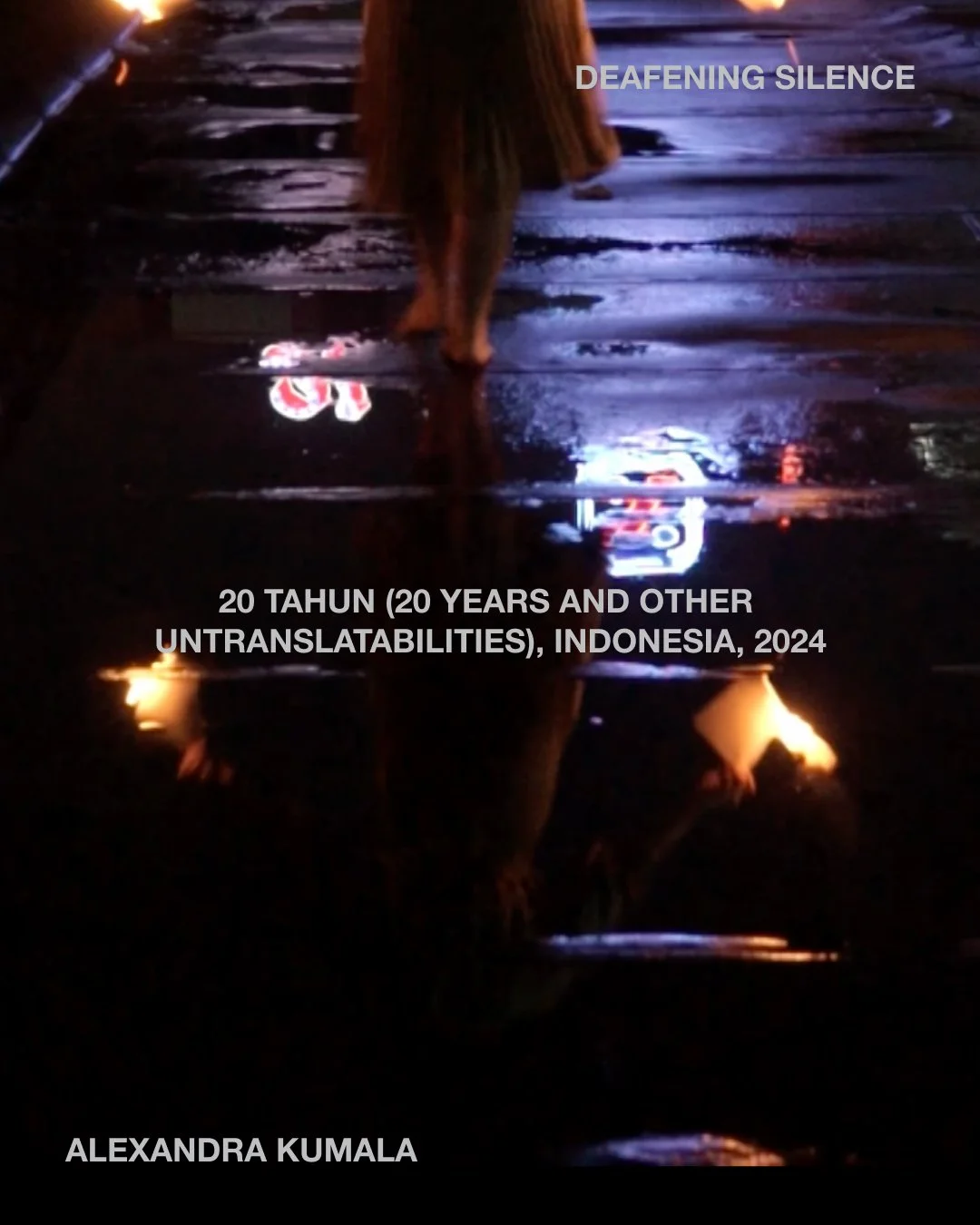
A funeral. A cremation. An attempt to articulation. To (fail to) purge. Flipping the image on the burning, destruction and violence decades ago, the filmmaker documents a funeral and cremation she held for the ethnic hate still directed at her 20 years later.
-
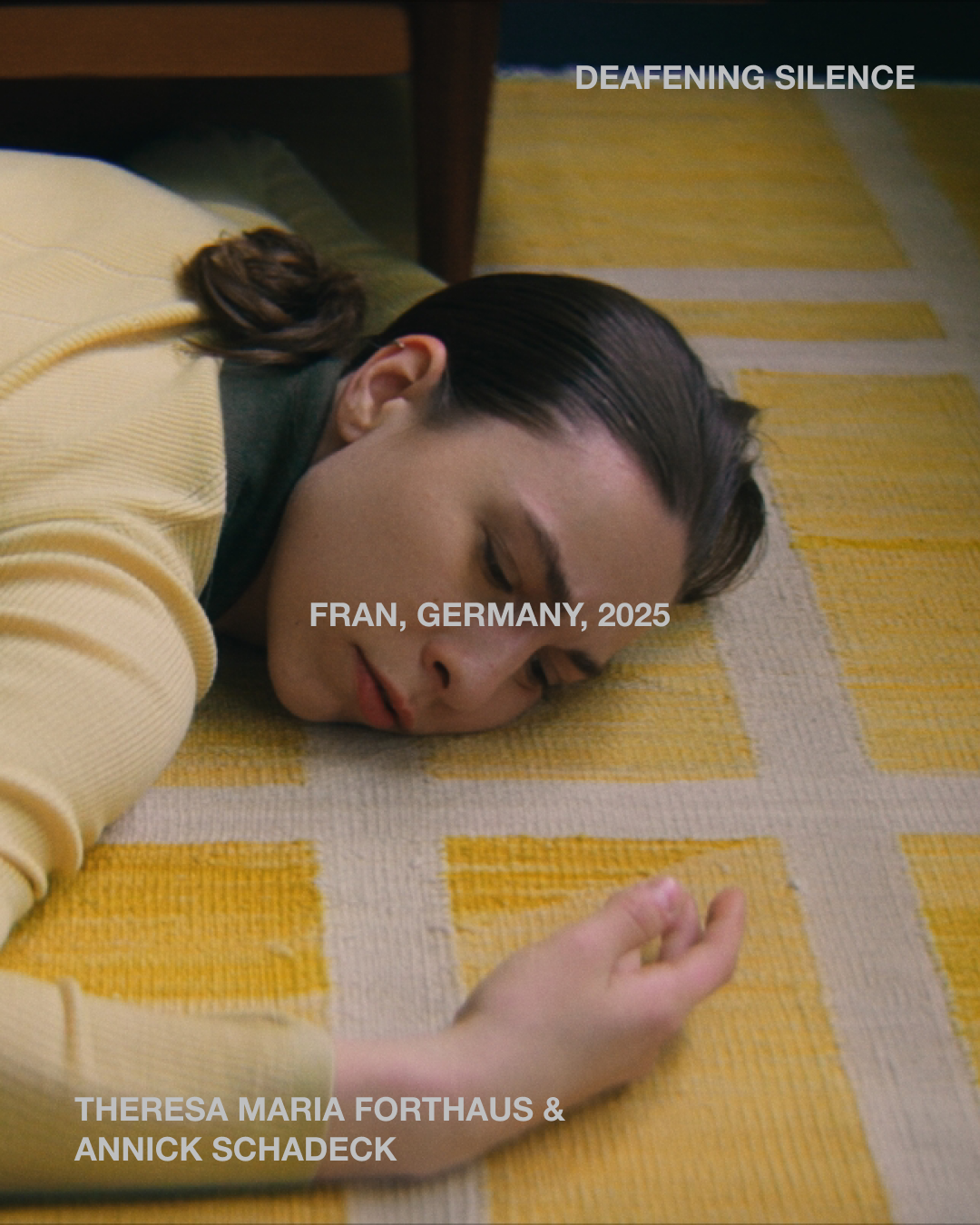
The experimental film follows FRAN as she enters an apartment where past and presence co-exist. She moves through the space not with purpose, but through physical intuition passively confronted by objects and memories.
-
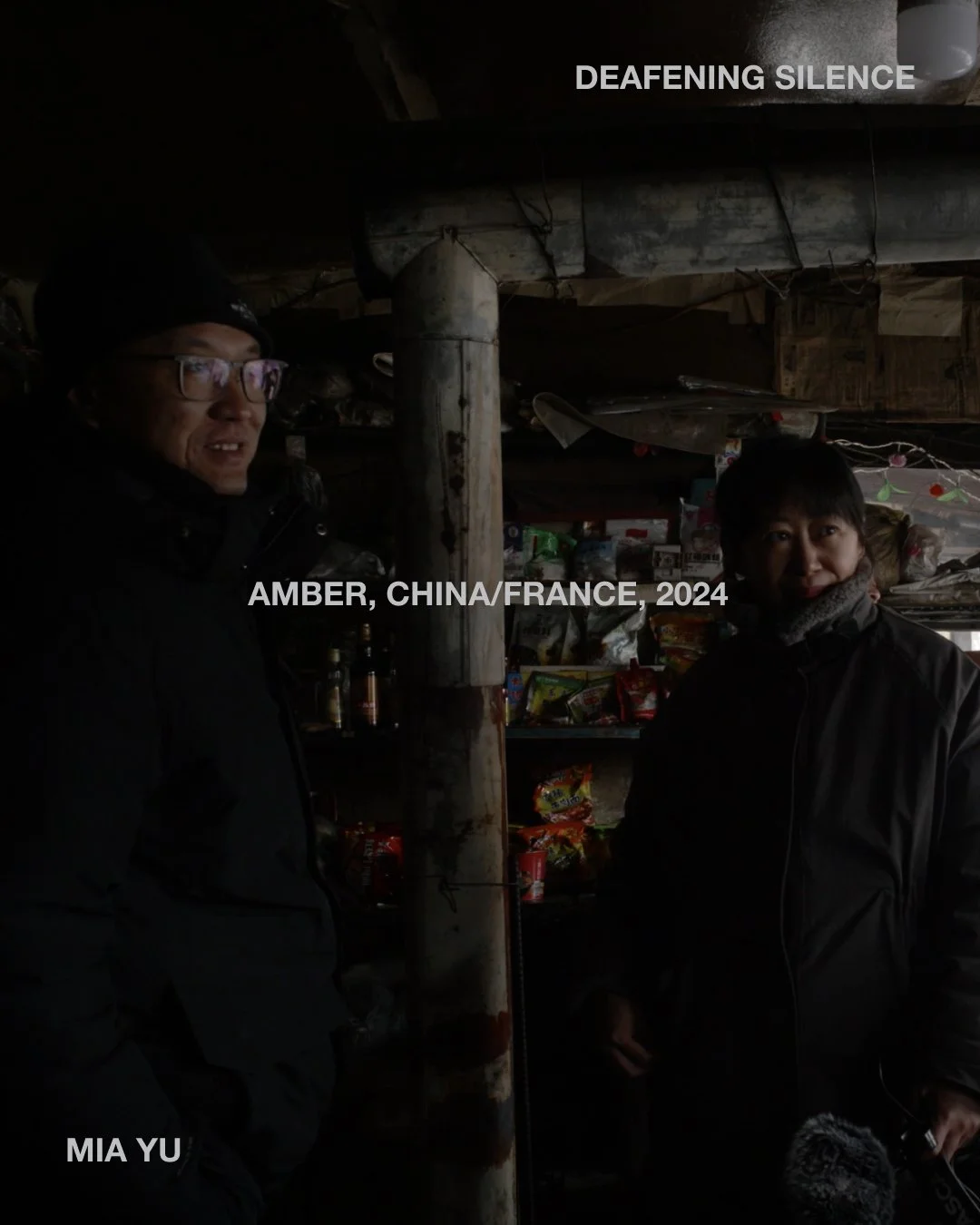
Amber is set in a convenience store beside a gigantic open-pit coal mine in northeastern China. Decades of intensive mining have caused the surrounding land to sink, leaving the region geologically unstable. With no access to affordable fuel, the store owner fears surviving the harsh winter. As neighbors have been moving away, they leave behind piles of discarded clothing, which the owner burns in the furnace to heat the store. One snowy winter day, a group of retired miners gathers around the furnace to recall the past. Their most cherished memory is of searching for amber in the mine—a rare, fleeting moment of beauty amid the industrial grime. As they chat, a Peking Drum Opera plays on the television, declaring: "......rearrange the mountains and waters for a renewal of life."
-
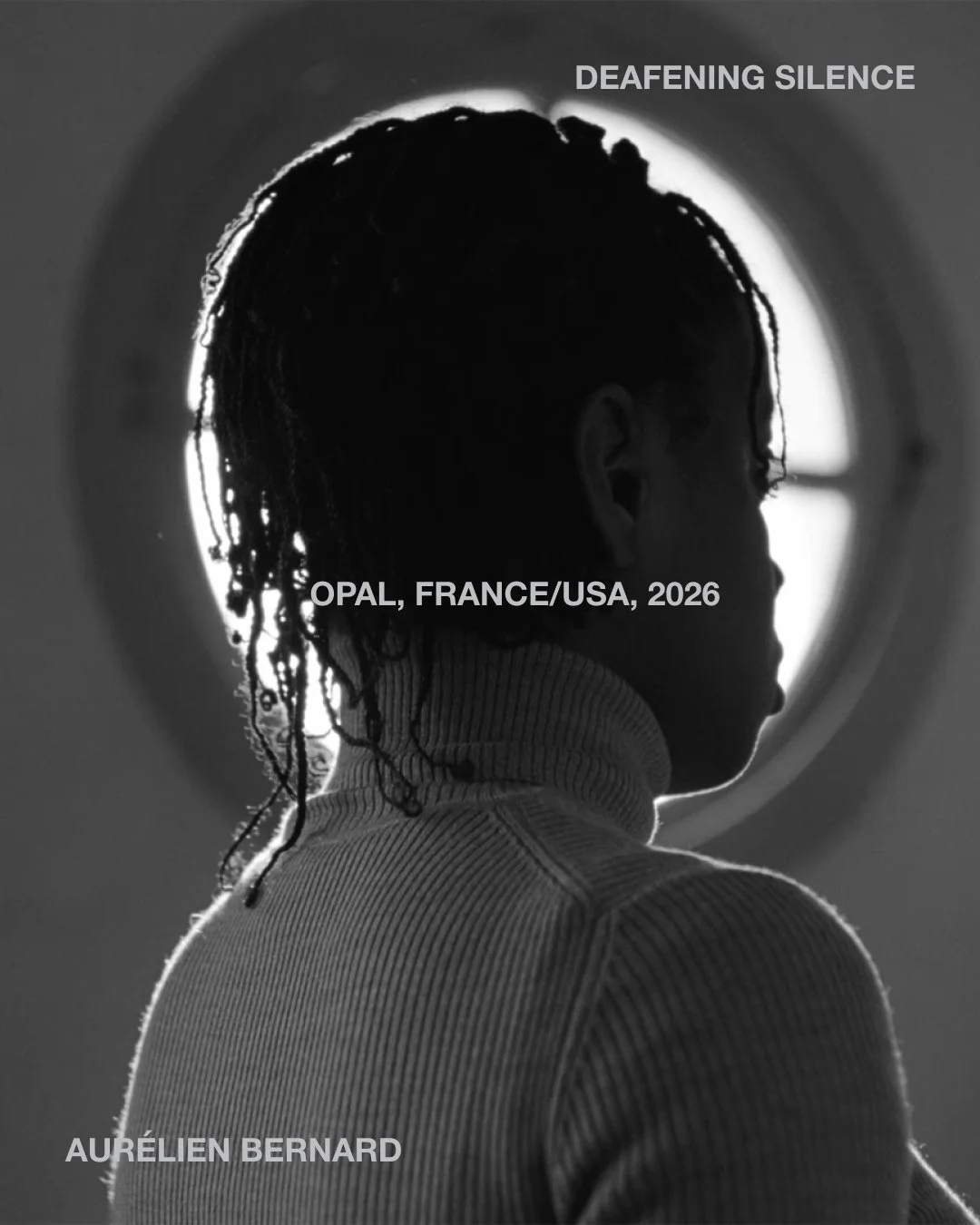
Based on a poem by Fariha Róisín, "opal" is a manifesto on human connection. Layered on the interplay of light and shadow, the film reveals beauty not only in what is voiced, but in the unspoken - the trembling, the yearning, and the pulse between silences. Dialogue, body movements and the inherent negotiation within language unfold like poetry, mirroring the rhythms of our inner worlds, embracing both the fluidity and fragility of expression.
On Silence, Speech and opal: A Conversation with Aurélien Bernard
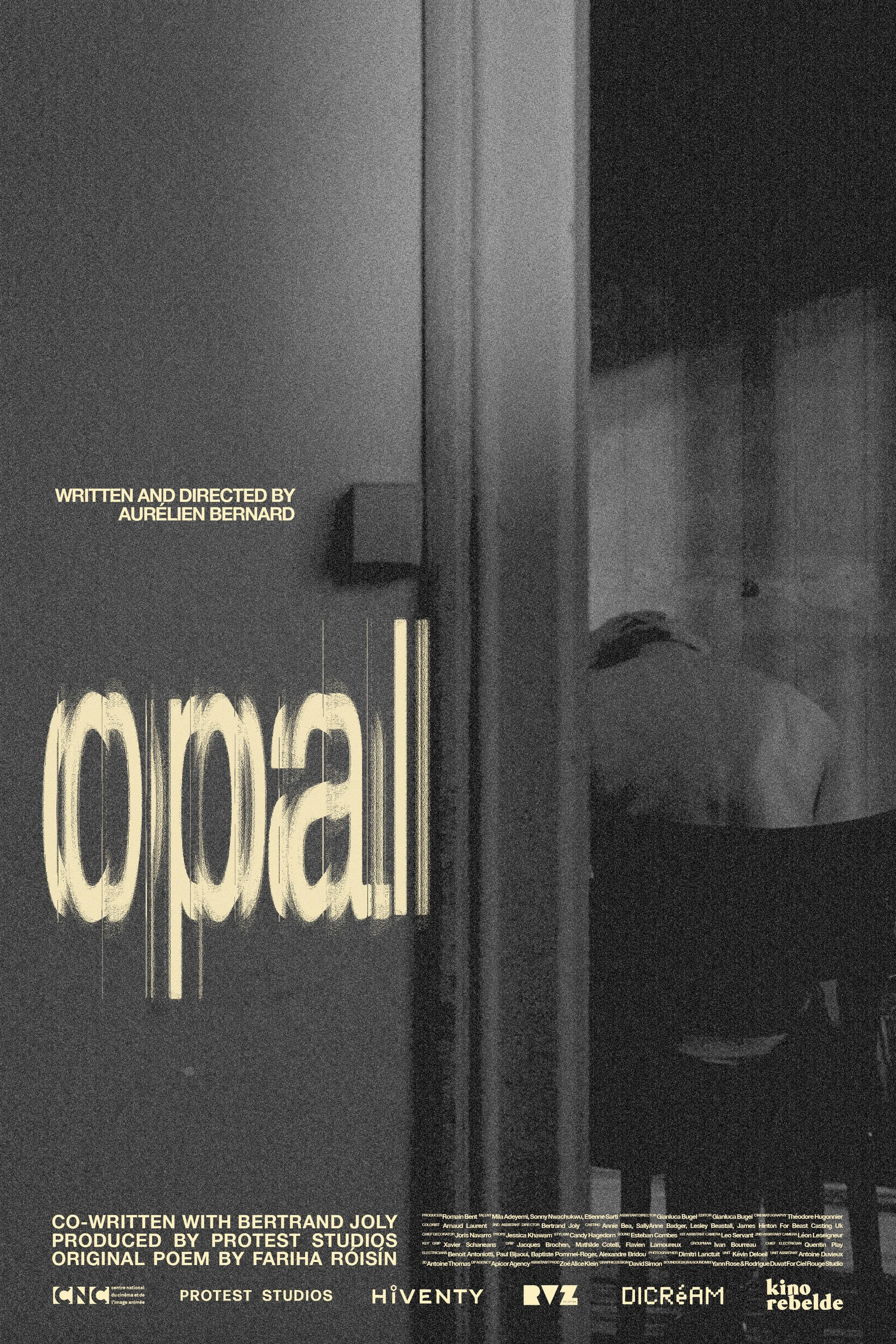
As part of DEAFENING SILENCE, Projet Betula presents the world premiere of opal (2026), a new short film by French visual artist and filmmaker Aurélien Bernard. Conceived as an exploration of language, stuttering, and the fragile space between speech and silence, opal unfolds through the cadence of spoken words and a poem by Fariha Róisín. We spoke with Aurélien about listening as a form of attention, the poetics of interruption, and the ways silence can move between the intimate and the collective.
Silence as Survival
This form of silence is connected to the right not to be fully understood, explained, or exposed to others. Silence here appears in two forms: it can protect personal boundaries and one's experience, It can also be a deliberate choice not to speak and stay hidden. In this sense, silence is a form of protection and a strategy for survival.
-
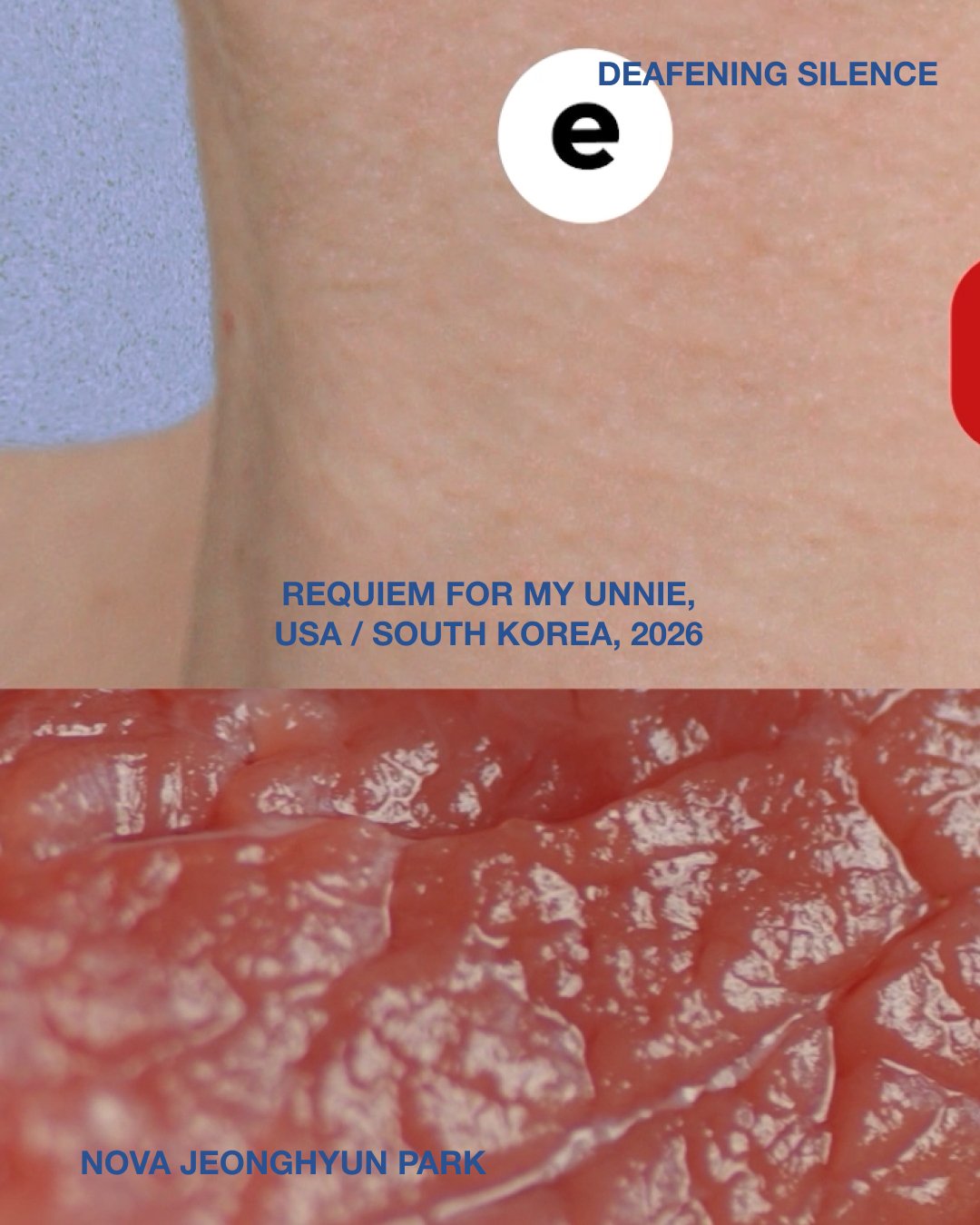
Requiem for My Unnie is an essay film and audiovisual ritual addressed to the artist’s unborn older sister. The title retains unnie, the Korean term a woman uses to address an older sister, preserving the intimacy of a relationship that could never be lived. The sister exists in family memory only as a missing interval within its shared story.
-
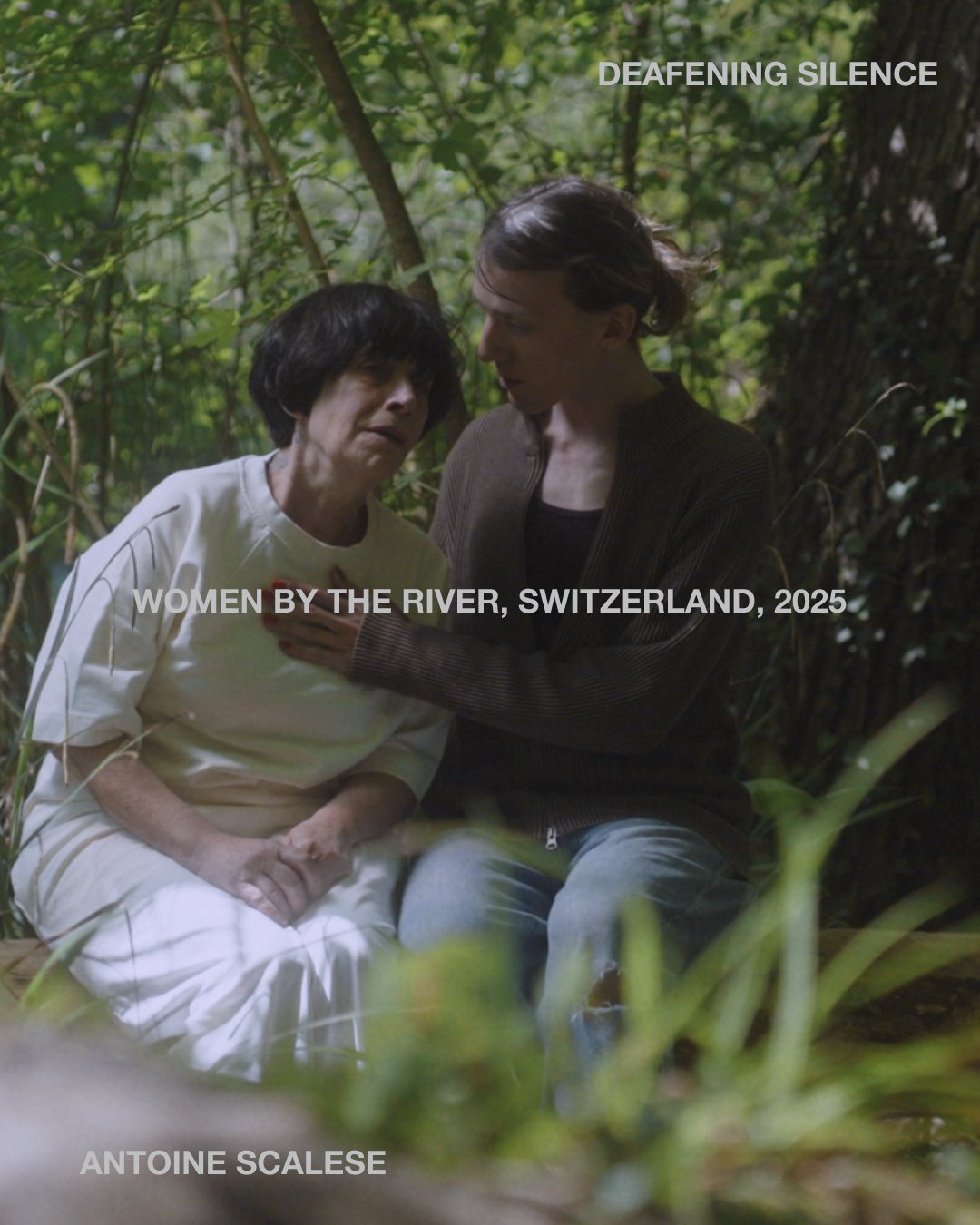
A group of women is taking a self-defense class by the water. Suddenly, the distant sound of a helicopter triggers a wave of panic. While most of the group rushes to seek shelter in a hangar, one woman freezes and wanders off alone. Women by the River portrays a community of women standing united against an invisible threat. What if care, in a threatening world, became a form of collective survival?
-
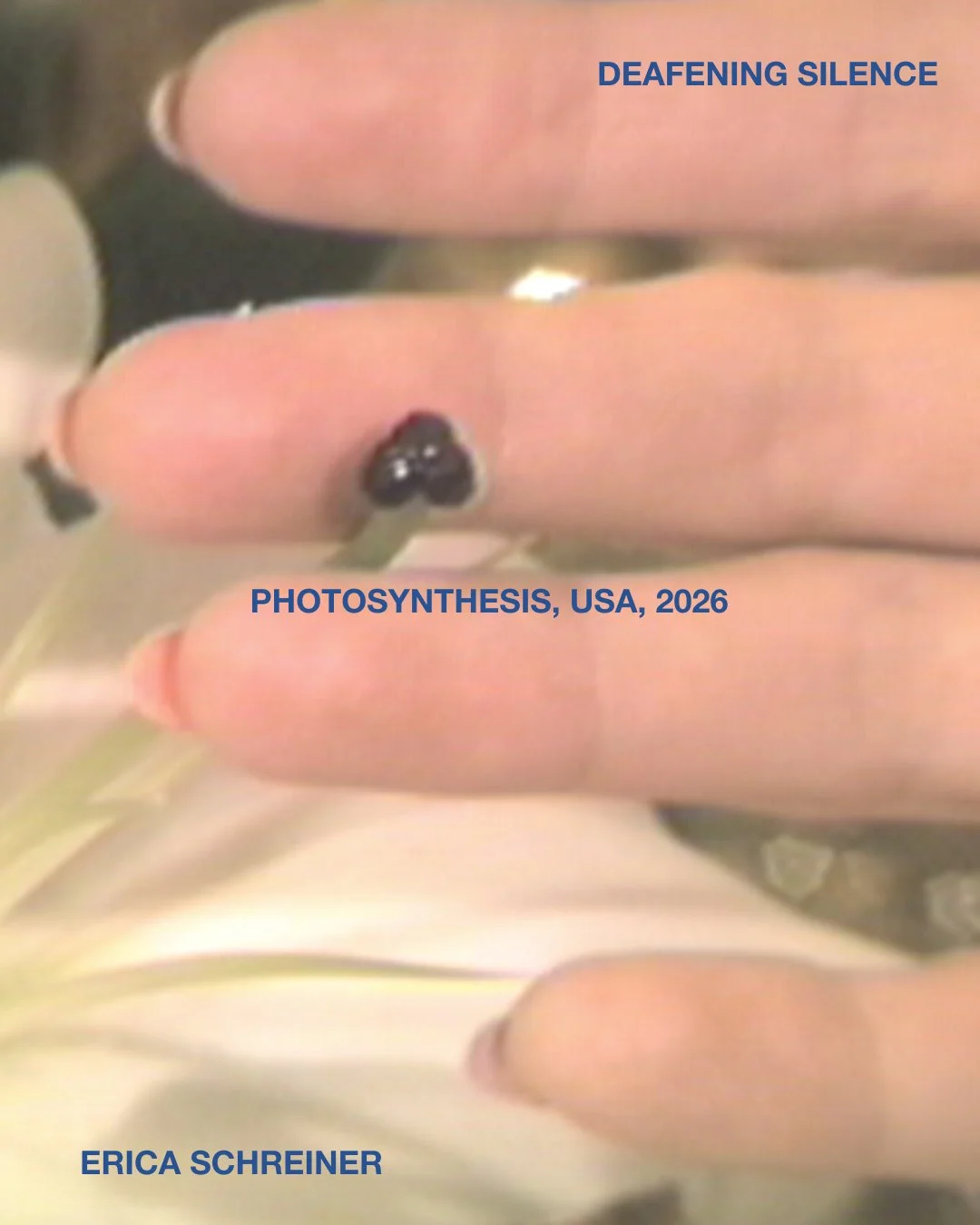
With Dehlia’s consent, I began recording our phone conversations. We lived together when we were 20 and now we’re 40. During one call, stories of past traumas surfaced, stories of assault and the darkness of violation. Yet, through the words and the silence between them, I found a new liberation. In the act of speaking and being heard, something alchemical unfolds: the stories so many women carry are brought out of the dark and given breath and light.
-
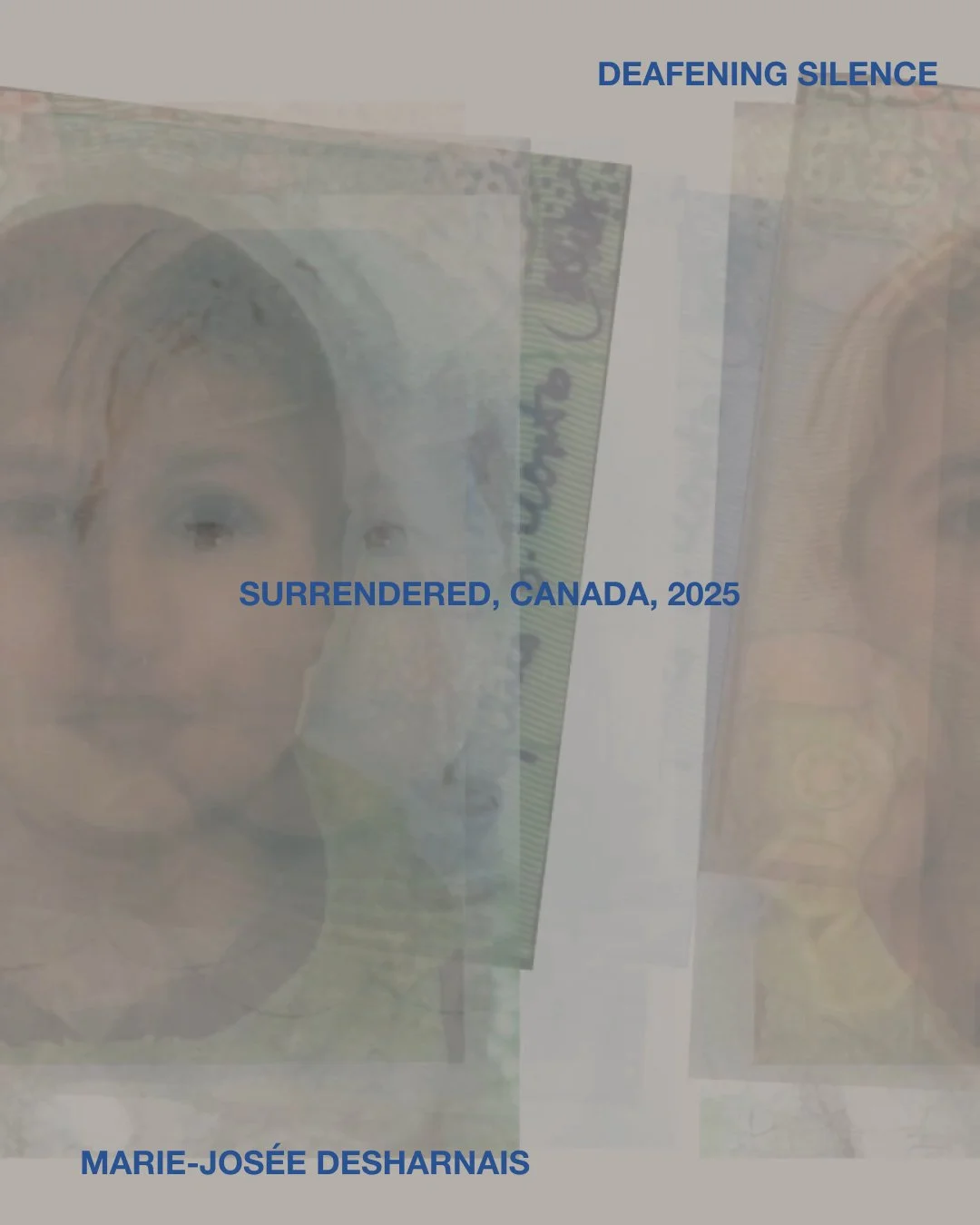
SURRENDERED is an experimental short film exploring psychological pressure, dissociation, memory, and survival through embodied perception. Rather than following a conventional narrative structure, the film uses fragmented imagery, repetition, restrained narration, sound, and sensory disruption to evoke an internal state that resists straightforward representation. The work unfolds at the shifting threshold between resistance, loss of control, and surrender, asking how experiences that are difficult to articulate may instead be felt through the body.
-
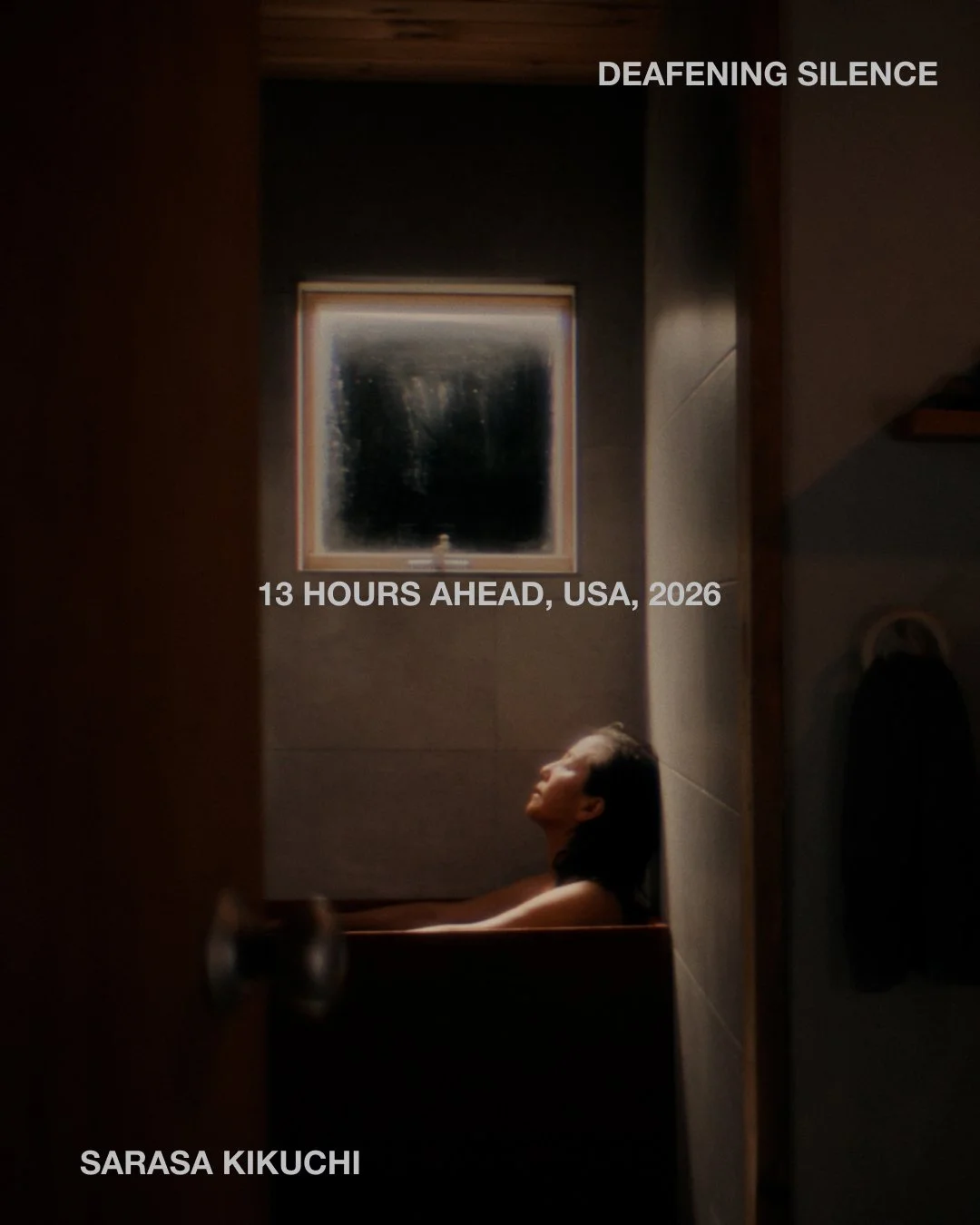
13 Hours Ahead follows three generations of women whose lives have been reshaped by migration between Japan and the United States: a Japanese single mother building a life in America, her aging mother who remains in Japan, and her American-born daughter growing up between the emotional and cultural consequences of that separation. Across a thirteen-hour time difference, their parallel lives unfold through ordinary domestic routines, revealing how migration extends beyond the person who leaves and becomes an intergenerational experience.
-
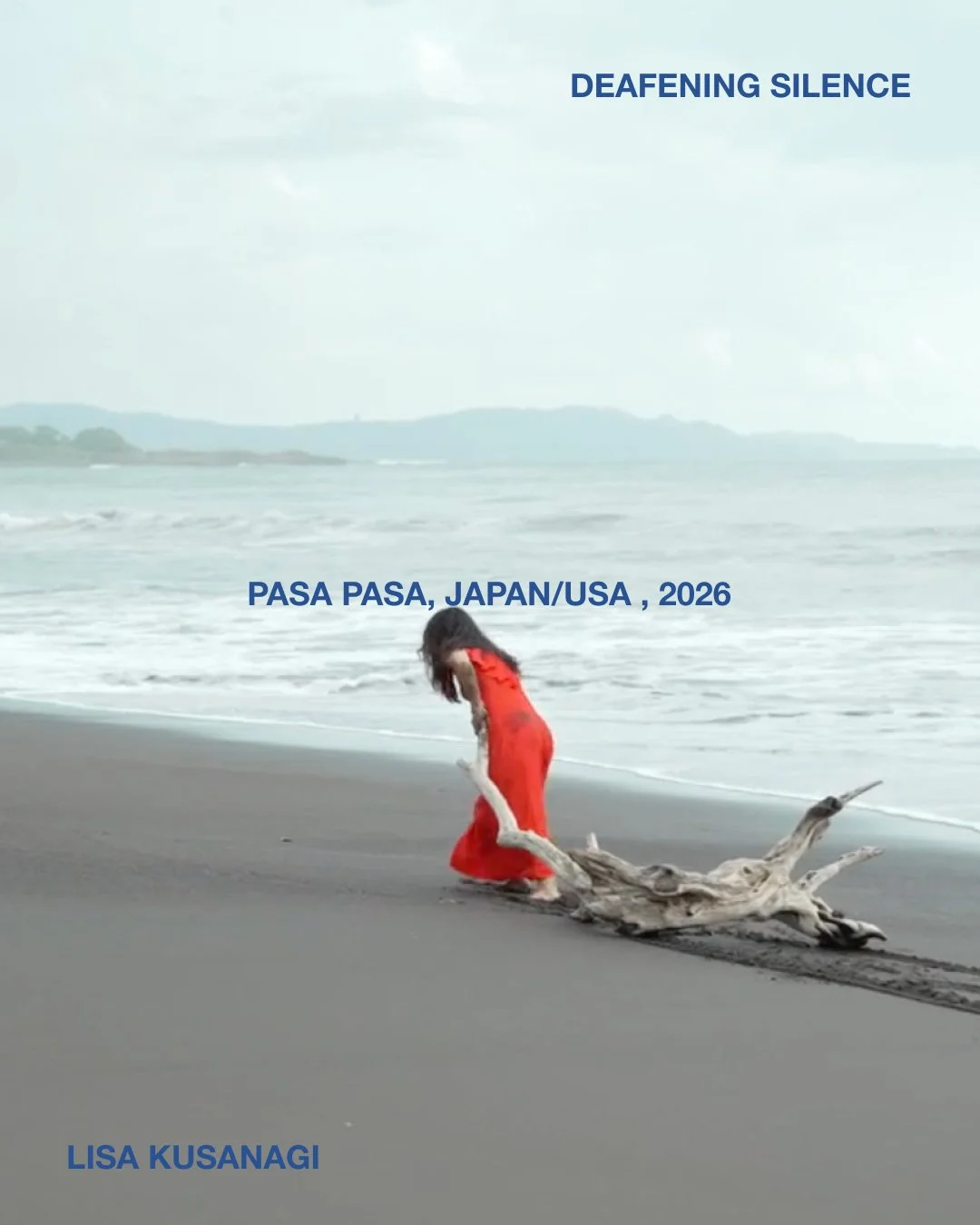
The work explores vulnerability, the lived experiences, and the weight of womanhood. The title draws from multiple languages. In Japanese, pasa pasa describes a state of dryness, of being depleted of all moisture; the Spanish word for raisin; and an intimate invitation to enter. I believe women are conditioned to labor until we become pasa pasa: dried out, depleted, emptied of ourselves. We give unconditionally: caretaking, nourishing, sustaining, until the body has nothing left. We carry names that were never fully ours, identities shaped by belonging to others, quietly negotiating for ownership of ourselves in a world that rarely notices the cost.
Projet Betula
Projet Betula is an independent, non-profit platform supporting international contemporary art with a focus on migration, nomadism, and resilience. We provide space for artists uprooted by war, displacement, or forced relocation to share their stories and engage in global conversations.
Through exhibitions, screenings, performances, and educational initiatives, we aim to create environments for reflection, creation, and dialogue — highlighting both the struggles and strength of those adapting to new, often hostile conditions, and amplifying voices shaped by displacement and migration.
Césure, Paris
Césure is a multidisciplinary cultural and community space located on the former Censier campus of Sorbonne Nouvelle University in Paris. Developed as a temporary urban project, it brings together artists, cultural organisations, social initiatives, students, and independent professionals within a shared environment dedicated to knowledge exchange, experimentation, and collective learning.
Through exhibitions, performances, concerts, workshops, conferences, and public programmes, Césure creates space for artistic production, dialogue, and new forms of collaboration. Its classrooms, libraries, courtyards, and communal areas have been transformed into studios, offices, exhibition spaces, and meeting places — making the former university campus an open and evolving site for culture, education, and social engagement.