On Silence, Speech and opal:
A Conversation with Aurélien Bernard
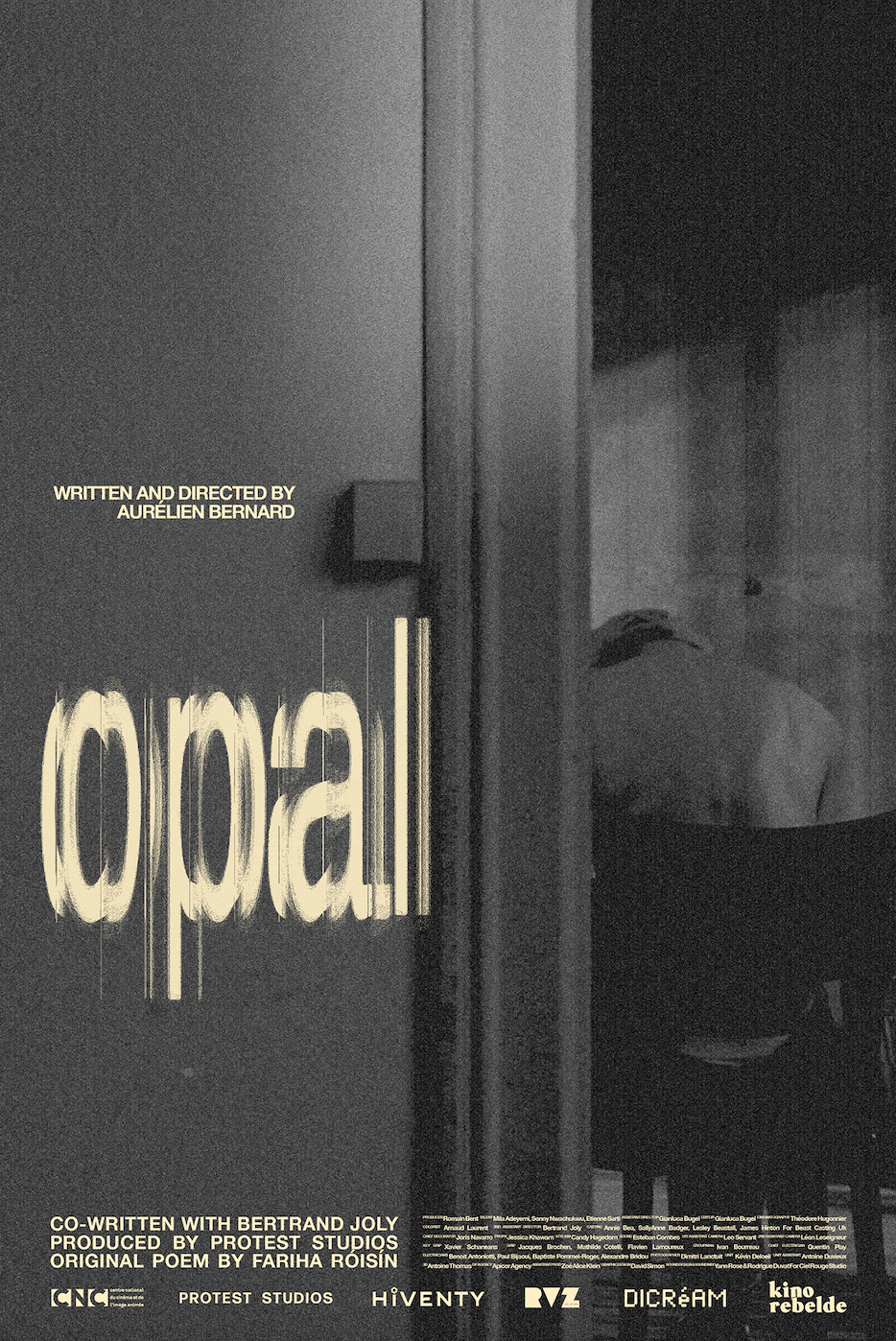
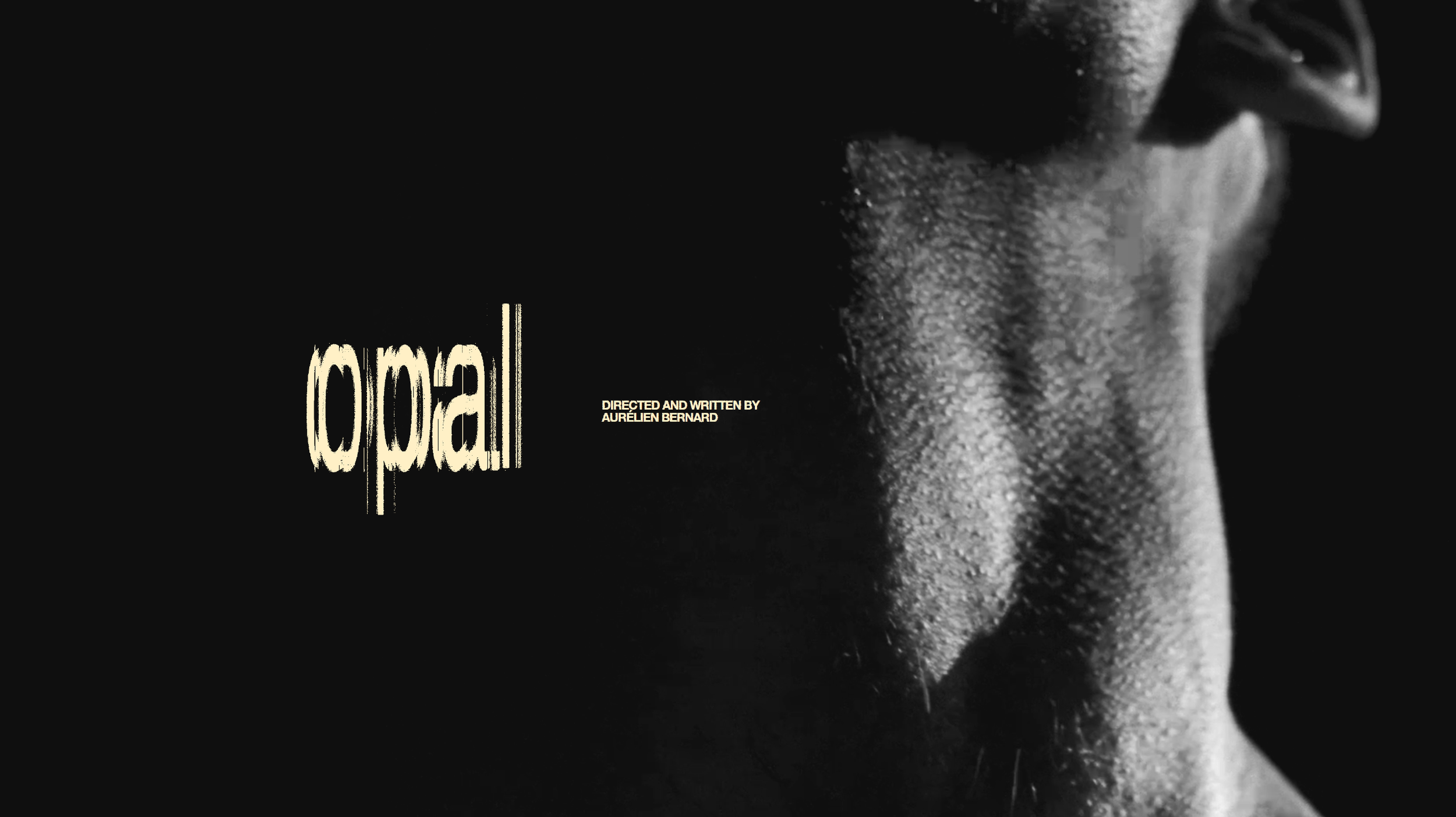
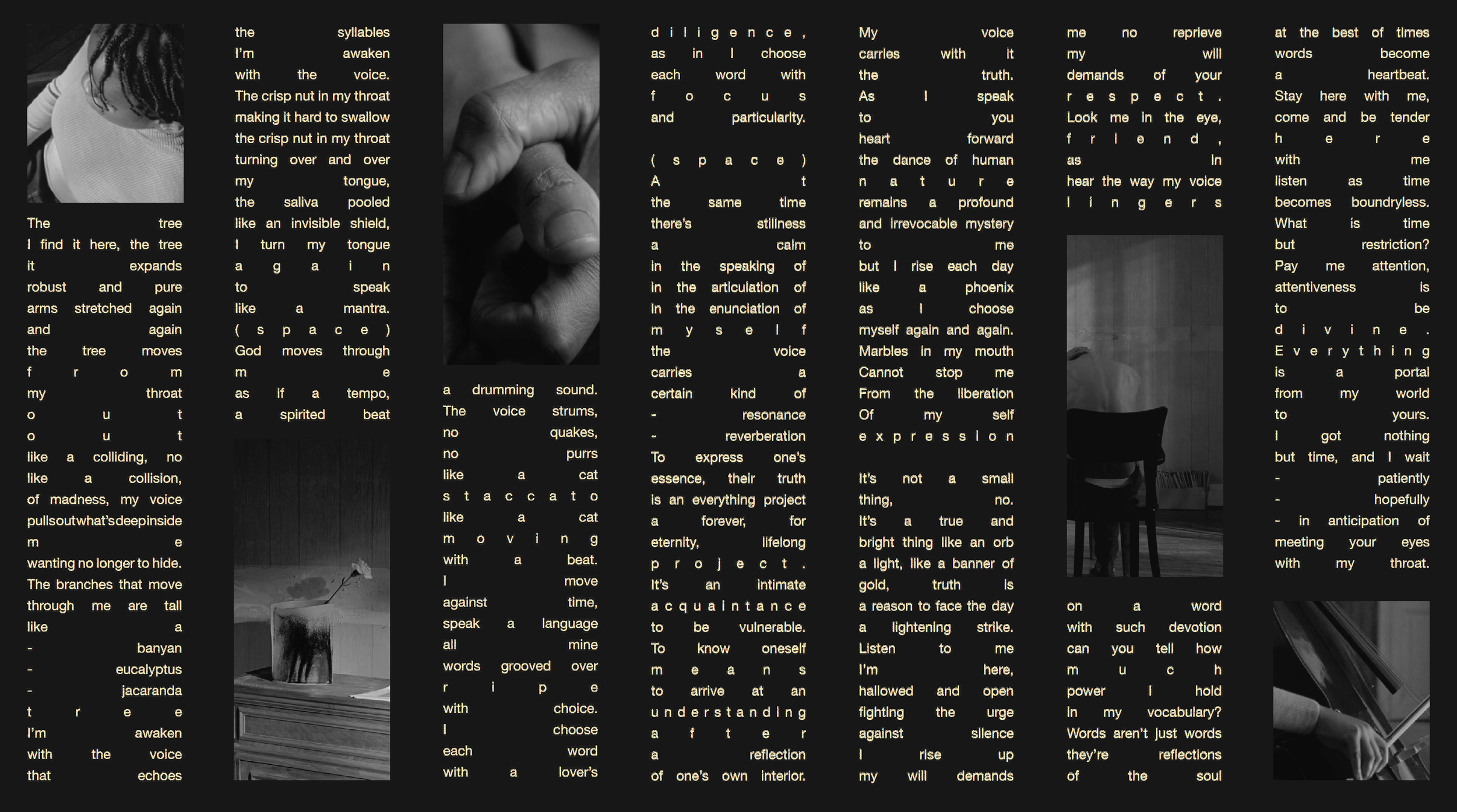
As part of DEAFENING SILENCE, Projet Betula presents the world premiere of opal (2026), a new short film by French visual artist and filmmaker Aurélien Bernard. Conceived as an exploration of language, stuttering, and the fragile space between speech and silence, opal unfolds through the cadence of spoken words and a poem by Fariha Róisín. We spoke with Aurélien about listening as a form of attention, the poetics of interruption, and the ways silence can move between the intimate and the collective.
“opal” invites the viewer to immerse in a space of confrontation where comfort, tension, discomfort, relief, and ecstasy intertwine.
By highlighting speech and the negotiation of words, the film reintroduces sensitivity at the heart of the exchange, while drawing a parallel between the fluidity of language, the body, and music. Three portraits face each other on screen, constantly confronting and playing between the geographical space of the screen and the mental space of the viewer. The narrative challenges the causal links between these portraits, creating shifts and assonances that open up a space and time conducive to dreams, fear, anxiety, contemplation, and ecstasy.

Aurélien Bernard (1987) is a French visual artist whose works aim to provide an immersive emotional and sensory experience, inviting viewers to engage in introspective reflection on the nature of existence.
His artistic practice is characterized by an exploration of complex themes such as inclusion, collective memory, empathy, and taboo relationships. Fascinated by the interplay of these concepts and their influence on both individual and collective perceptions of reality, Aurélien challenges established norms and reveals often-overlooked aspects of society through poetic and immersive narratives.
His debut experimental film, “Pharoah - Fall”, released in early 2021 is an homage to jazz legend Pharoah Sanders. Showcased on renowned platforms such as Nowness, Boiler Room, and Showstudio, the film explores the spiritual connection between sound and image while paying tribute to Sanders’ legacy.
In 2023, Aurélien directed “reed”, an art film that captures the creative ritual of Shabaka Hutchings, a prominent figure in contemporary London jazz, in a visual meditation on the power of sound. This film was featured on the platform and gallery 180fact.
FILMOGRAPHY
2026 opal
2023 (reed)
2021 PHAROAH
France • 2026 • 13 min.
• 35mm English • DCP • B&W
-
In opal, stuttering seems to exist somewhere between speech and silence. Do you see it as a kind of third space?
I spent a lot of time interviewing people who stammer, as well as speech therapists and specialists, both in Paris and in the UK. I spoke particularly with young people, and I was struck by how often they used naturalistic metaphors to describe their experience of stammering. I became fascinated by the idea that these images of nature, their analogies and points of reference – for what people consider a ‘handicap’ – might emerge from an inner landscape rather than from an outside influence. Nature has always been extremely present in my work, but never quite this way.
These colourful images and metaphors also began to resonate with something more personal. I have never had a stammer myself, but as a teenager I struggled intensely with blushing. Something really clicked when I met a speech therapist who explained to me how closely the mechanisms behind these two experiences could relate to one another.
It also brought me back to a very particular moment in my own life: I was working for a major music company and had to give a very important presentation in front of international music executives. Suddenly, I simply couldn’t speak. No words would come out of my mouth.
What I remember is the strange mixture of shame, responsibility, vulnerability, but also the shocking discovery of a dreamlike space in which time seemed to decide, on its own, to stop. This suspension was unsettling and violent, but also strangely peaceful – like a space between two intense dreams. I found myself entering an altered state, a kind of involuntary inner experiment triggered by submission and refusal.
This is also what led us to shoot in black and white, and on film. Colour could emerge through the inner world, without necessarily belonging to it. The colours and richness of the analogies already inhabit the image through sensation, memory and projection. Black and white became a way of holding all these different states within the same reality, while also suspending the image from a specific sense of time. Colour doesn’t represent an escape from reality, but another reality taking place inside it.
The wide-angle lenses became part of that same tension: they remain rooted in the physical world, yet subtly distort its proportions and perspectives. And film brings another layer to this instability. Its texture, grain and unpredictability make the image physical and imperfect, where interruption and accident are not flaws to be erased, but part of the image itself.
The film also draws inspiration from Roy DeCarava and the work of French photographer Guy Le Querrec, who, to me, are among the artists who have most powerfully captured this in-between space through their relationship with jazz and the worlds surrounding it.


DIRECTOR & SCREENWRITER
Aurélien Bernard
CO-WRITTER
Bertrand Joly
PRODUCER
Romain Bent (Protest Studios)
ORIGINAL POEM
Fariha Róisín
CAST
Mila Adeyemi
Sonny Nwachukwu
Etienne Sarti
ASSISTANT DIRECTOR
Gianluca Bugel
EDITOR
Gianluca Bugel
CINEMATOGRAPHER
Théodore Hugonnier
SOUND
Esteban Combes
COLORIST
Arnaud Laurent
2nd ASSISTANT DIRECTOR
Bertrand Joly
ASSISTANT PRODUCER
Zoé Alice Klein
SOUND DESIGN & SOUND MIX
Yann Rose & Rodrigue Duvat (Ciel rouge Studio)
GRAPHIC DESIGN
David Simon
FESTIVALS & SALES
María Vera (Kino Rebelde)
Supported by CNC, Dicréam, Hiventy, RVZ